
How to Send Bulk WhatsApp Messages Without Getting Your Number Banned
WhatsApp has emerged as a powerful business communication platform, helping companies engage with their customers instantly and efficiently.
SmartEngage
From product announcements and promotional offers to order updates and customer support, businesses can use WhatsApp to build direct relationships with their audience.
However, sending a large number of messages without following WhatsApp's rules can create serious problems. Customers may report unwanted messages, engagement can fall, and a business account may face messaging restrictions or suspension. So, how can you send bulk WhatsApp messages safely?
The answer is not to find a way around WhatsApp's safeguards. No tool or trick can promise that a number will never be restricted. What protects a number is sending through the official WhatsApp Business Platform, messaging people who asked to hear from you, sending relevant content and keeping your contact list healthy.
What Does Bulk WhatsApp Messaging Mean?
Bulk WhatsApp messaging generally means sending a message to multiple customers or contacts at the same time. For example, a business might want to inform 500 customers about:
- A new product launch
- A seasonal sale
- New stock availability
- An upcoming event
- A special business offer
- A service announcement
- A limited-time promotion
Instead of manually sending the same message to every customer, businesses can use suitable WhatsApp business tools to manage communication more efficiently. However, bulk messaging should not mean sending unsolicited messages to thousands of random phone numbers. The quality of your contact list and the relevance of your communication matter far more than the number of messages you can send.
Why Do WhatsApp Numbers Get Restricted or Banned?
WhatsApp has systems designed to detect spam, unwanted communication and behaviour that violates its policies. A business account may face problems when customers consistently receive messages they did not expect or want. Common risk factors include:
- Sending messages to people who never gave permission
- Using purchased or scraped phone-number lists
- Sending irrelevant promotional content
- Receiving a high number of spam reports
- Having customers frequently block the business
- Sending repetitive messages with little value
- Ignoring customer opt-out requests
- Using unofficial or unauthorized automation methods
- Violating WhatsApp Business or Commerce policies
The important point is that there is no guaranteed trick that prevents a number from being banned. The safest approach is to message customers who expect to hear from your business and to follow WhatsApp's policies.
Meta also gives every business number a quality rating based on how recipients respond to its messages. Blocks and reports pull it down, and a low rating can reduce how many people the number is allowed to message each day.
To understand how this works, read Understanding Quality Rating and Messaging Limits.
1. Build a Permission-Based Contact List
The foundation of safe WhatsApp marketing is consent. Before sending promotional messages, make sure customers have willingly provided their WhatsApp number and agreed to receive relevant communications. You can collect opt-ins through:
- Your website
- Online checkout
- Contact forms
- QR codes
- In-store registrations
- Social media campaigns
- WhatsApp click-to-chat links
- Customer account registration
- Events and exhibitions
For example, your website could include: "Enter your WhatsApp number to receive product updates, special offers and important announcements." This creates a much stronger foundation than importing a random database.
For more ways to build an opt-in list, see Growing a WhatsApp List That People Actually Want to Be On.
2. Never Buy Random WhatsApp Number Lists
Buying a large database of phone numbers may seem like a fast way to increase your marketing reach. It can actually create significant risks. People on purchased lists may not know your business. They may not remember providing their number, or they may have never agreed to receive WhatsApp marketing. When unexpected messages arrive, recipients are more likely to block or report the sender.
Instead of asking, "How many numbers can I message?", businesses should ask: "How many customers actually want to hear from us?" A smaller audience with genuine interest can produce much better results than a huge list of unengaged contacts.
3. Give Customers a Clear Reason to Subscribe
Customers are more willing to subscribe when they clearly see the value and advantages they will receive. For example, you could offer WhatsApp subscribers:
- Early access to new products
- Special promotions
- New-stock alerts
- Helpful tips
- Event notifications
- Exclusive offers
- Order-related updates
Avoid collecting phone numbers without explaining how you intend to use them. A transparent opt-in process helps create trust from the beginning.
4. Send Relevant Messages
Relevance is one of the most important factors in successful WhatsApp marketing. Imagine a customer purchased cooking ingredients from your business. Sending them information about completely unrelated products may reduce engagement. Instead, segment your customers based on their interests. For example:
- Restaurant customers: Wholesale ingredients, bulk pricing, and new stock.
- Retail customers: New products, seasonal offers and promotions.
- Existing customers: Reorder reminders, related products and loyalty offers.
Segmentation lets your business send fewer but more useful messages. In SmartEngage, you do this with contact books: keep each group in its own book and choose the right book when you create a campaign.
To set up your groups, read How to Create and Manage Contact Books.
5. Avoid Sending Too Many Messages
Even customers who have opted in may become frustrated if they receive promotional messages every day. A good WhatsApp strategy should have a sensible communication frequency. Before sending a campaign, ask:
- Is this message important?
- Is it relevant to this customer?
- Did the customer expect this type of communication?
- Have we contacted them too recently?
- Does the message provide genuine value?
If the answer to these questions is no, reconsider sending the campaign. WhatsApp may also hold back marketing messages to people who have received a lot of them recently, so a crowded schedule can reduce delivery as well as goodwill. Quality should always come before quantity.
6. Personalise Your WhatsApp Campaigns
A tailored WhatsApp message creates a more meaningful experience than a standard promotion. For example: Generic: "NEW OFFER. Get our products today. Contact us now." More personal: "Hi David, our new wholesale stock has arrived. Since you previously bought from our spice range, we thought you might be interested in the latest availability."
Personalisation can include the customer's name, product interest or customer category, provided the information is collected and used appropriately. The aim is not decoration. It is to make the message clearly relevant to the person reading it.
7. Use Approved WhatsApp Business Solutions
Businesses planning to send marketing messages at scale should use appropriate WhatsApp business infrastructure rather than relying on unofficial tools designed to imitate or automate the consumer WhatsApp application. Depending on the use case, WhatsApp Business Platform solutions can provide businesses with structured ways to communicate with customers at scale.
When businesses start conversations through the WhatsApp Business Platform, they must follow WhatsApp's rules on message templates, opt-ins and other policies. Every marketing message has to use a template that Meta has approved. SmartEngage connects your number to the official WhatsApp Cloud API, so your campaigns go out through this approved route rather than an unofficial sender.
8. Respect Opt-Out Requests Immediately
Customers should have a simple way to stop receiving promotional messages. You can include wording such as: "Reply STOP if you no longer wish to receive promotional updates." When a customer opts out, suppress that contact from future promotional campaigns.
In SmartEngage this happens automatically. A customer who replies STOP or UNSUBSCRIBE is marked as opted out and left out of every future campaign, and replying START opts them back in. The contact stays in your list, so you keep the record without messaging them.
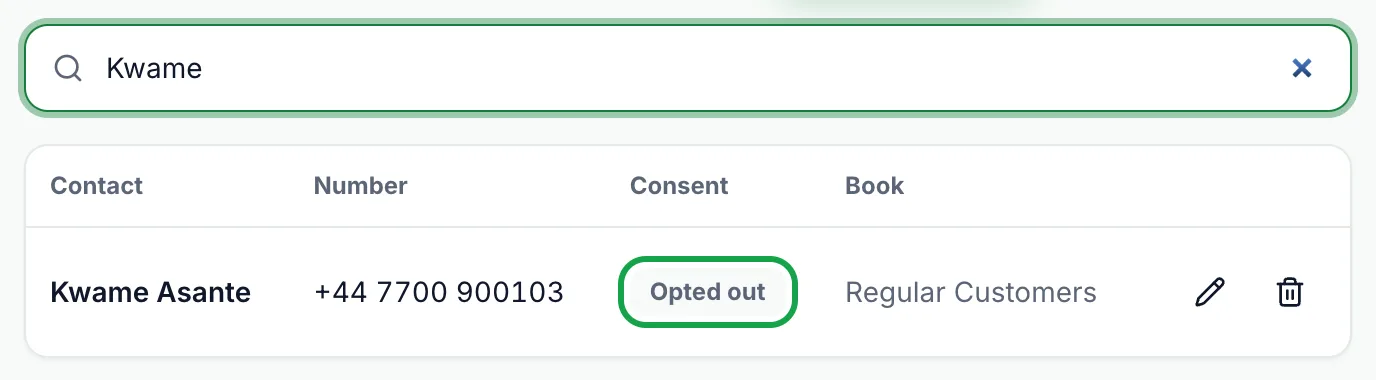
Continuing to message someone after they have clearly asked you to stop damages your reputation and increases the risk of complaints. Respecting opt-outs is not just good compliance practice. It is good customer service.
For how opt-outs are handled, read Duplicates, Invalid Numbers and Opt-outs Explained.
9. Monitor Campaign Performance
Sending WhatsApp campaigns without monitoring their performance makes it difficult to understand what your customers actually want. Track useful indicators such as:
- Delivery and read rates
- Failed messages and the reasons given
- Customer replies
- Opt-outs
- Your number's quality rating
- Conversions and sales
WhatsApp does not tell a business who blocked or reported it, so the quality rating is the signal to watch. If a campaign brings unusually many opt-outs or the rating drops afterwards, investigate why. Perhaps the audience was poorly targeted, the offer was irrelevant or the messages were sent too often. Use campaign performance as feedback for improving future communication.
10. Keep Your Content Professional
Your WhatsApp messages represent your brand. Avoid misleading headlines, exaggerated claims, and spam-like wording. Instead, create messages that are:
- Clear
- Concise
- Helpful
- Relevant
- Honest
- Professionally written
For example: "New Stock Available – Bulk Orders Welcome. Our latest range is now available for wholesale customers. Contact our team on WhatsApp for availability and pricing." This is more useful than repeatedly sending messages filled with emojis, capital letters and aggressive sales language.
11. Don't Try to Bypass WhatsApp Restrictions
Some businesses search for methods to avoid WhatsApp's anti-spam systems, rotate numbers, or use unauthorized software after their accounts have been restricted. This is not a sustainable marketing strategy. Creating new numbers after receiving complaints does not solve the underlying problem. If customers don't want your messages, changing the number will not create genuine engagement.
Instead, improve your contact acquisition process, review campaign content, reduce unwanted messaging, and make sure your communication follows the applicable WhatsApp policies.
How SmartEngage Can Help With WhatsApp Marketing
Managing WhatsApp marketing by hand becomes difficult as a business grows. You may have hundreds or thousands of customers, different audience groups, several campaigns and ongoing conversations.
SmartEngage brings those together on the official WhatsApp Cloud API. Campaigns use templates approved by Meta, contact books keep your audiences separate, opt-outs are applied automatically, and the Schedule step shows your number's quality rating before you send. None of this replaces permission and relevance, but it makes the good habits easier to keep.
A Simple Safe WhatsApp Marketing Strategy
A practical strategy looks like this:
- Collect customer WhatsApp numbers through genuine opt-in methods.
- Explain clearly what customers will receive.
- Organise contacts into relevant groups.
- Write useful, personal campaign content.
- Send through the official WhatsApp Business Platform with approved templates.
- Send campaigns only to people who opted in.
- Watch delivery, opt-outs and your quality rating.
- Stop messaging anyone who no longer wants promotions.
- Keep improving your targeting and content.
This approach keeps your number in good standing and builds long-term customer relationships.
Final Thoughts
Sending WhatsApp messages to a large audience can be an effective marketing strategy, but successful bulk messaging is not about finding a shortcut around WhatsApp's restrictions. The safest approach is to build a permission-based customer list, message relevant audiences, avoid excessive messaging, respect opt-outs and use the official WhatsApp Business Platform.
Focus on conversations rather than volume. When customers recognise your business, understand why you are contacting them and receive information that is genuinely useful, they are more likely to engage, and far less likely to block or report you.
Ready to send safely?
Start free — no new number, no setup fee, no card required.
Keep Reading
 Account & WhatsApp Setup5 min read
Coexistence or API-Only: Choosing How to Connect Your Number
There are two ways to connect a WhatsApp number to SmartEngage. One keeps the WhatsApp Business app working; the other ends the number's life in the app for good. Here is how to choose.
Read article Contacts6 min read
Duplicates, Invalid Numbers and Opt-outs Explained
Why some rows in a SmartEngage import are skipped or refused, how duplicates are detected, what makes a number invalid, and what opting out actually does.
Read article Contacts6 min read
How Contacts and Contact Books Work in SmartEngage
What a contact holds, what a contact book is, and how the people you keep in SmartEngage become the audience for a WhatsApp campaign.
Read article